Get my free footage
Home/For agencies
Law enforcement & municipalities

The DI-9,
filled in
from the video.

Your officer opens the crash report and the hard boxes are already done — signal color, direction of travel, speeds, point of impact, the diagram — read off the camera, not reconstructed from memory. 744+ cameras across four states, including integration with your DOT’s existing feeds. Your officer reviews, edits and signs. We keep the archive.
collisioncam.com/officer/di9/SG-250506Utah DI-9 · Investigating Officer’s Report
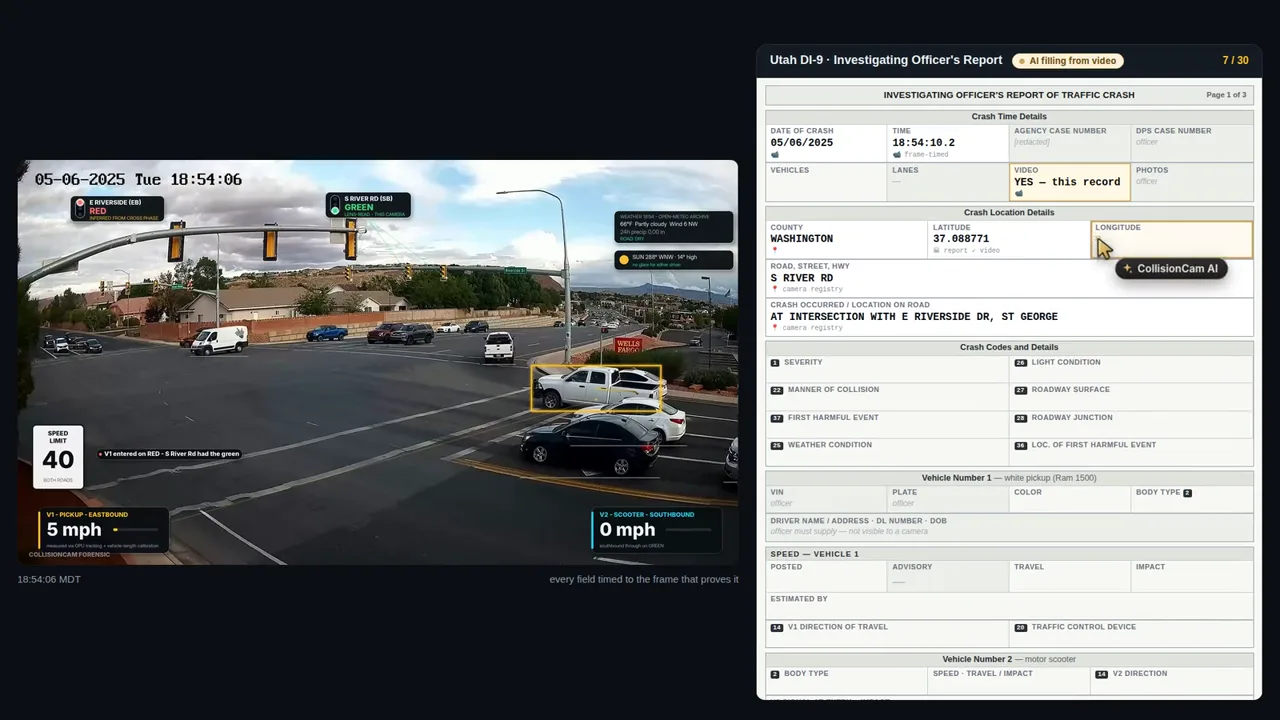
A Utah DI-9 crash report filling itself in next to the crash video
Utah DI-9 · filling in from the crash video · St George
Filled inthe fields nobody at the scene can know — signal color, speeds, who entered first
744+cameras
4states
DOTcamera feeds integrated
DI-9 autofill

Watch the DI-9 fill itself in.

This is what the officer sees. Left: the crash, tracked by AI. Right: Utah’s official DI-9. Every box fills in the moment the video proves it — the fields nobody at the scene can know for certain, because the cars had already moved and nobody was filming. Police arrive after the crash is over; the camera was there for it.

collisioncam.com/officer/di9/SG-250506Utah DI-9 · Investigating Officer’s Report
Real crash · Riverside Dr & River Rd · St George · Utah DI-9 filled from the video

Nobody is typing. The gold pointer is CollisionCam’s AI: it reads the crash video and fills in each box itself, only after the video proves it. Your officer reviews the draft and signs.

Bird’s-eye replay · drawn from the video, to scale

Not from bad officers. From missing facts. We give your officer the facts before the report is written, and the officer still writes the report.

The question every agency asks first

You get the evidence. We keep the archive.

Every camera program has a hidden cost: once an agency owns the footage, every attorney, insurer and citizen who wants a copy files a records request with your office.

Our footage belongs to a private company, not a government body. Your investigator asks for the clip a case needs and we send it. Everyone else asks us. None of it lands on your records staff.

Who owns the footageCollisionCamNot your agency. No retention schedule, no storage to buy, no public-records requests.
Who handles public requestsCollisionCamDrivers, insurers and attorneys come to us directly.
What your investigator getsThe clip, on requestOriginal, unedited and timestamped, with the camera ID and a documented chain of custody.

Once a clip is in your case file it follows your agency’s evidence rules like anything else. We take the archive off your plate, not your file. Have your counsel confirm the fit with local policy.

Where the cameras are

Our cameras. Your DOT feeds. One archive.

We put cameras where crashes happen and where they are hardest to prove — and we integrate the DOT cameras your region already has, so one request covers both.

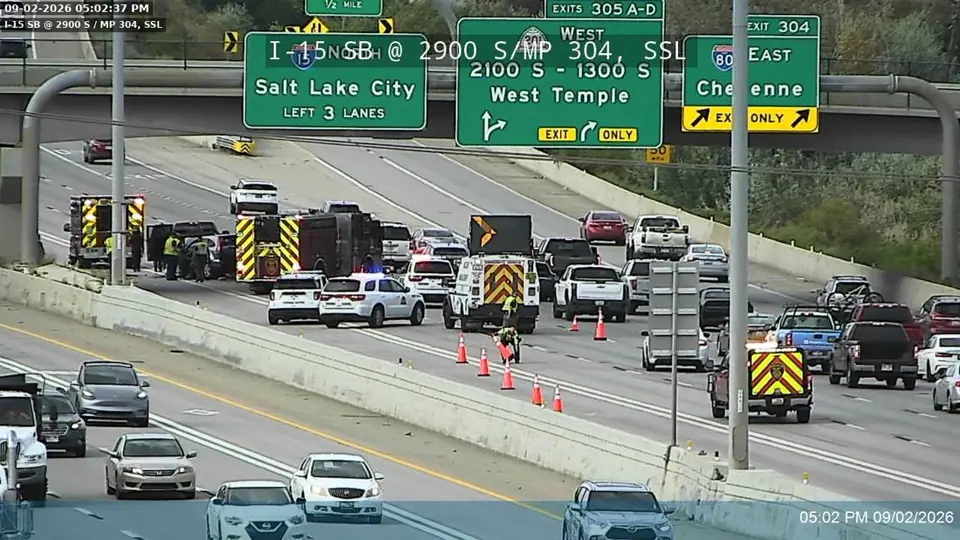
Interstate corridor coverage

Interstates and arterials

I-15, I-5, I-90, I-84, US-95 and the state routes that feed them. High speeds, and drivers whose stories never match.

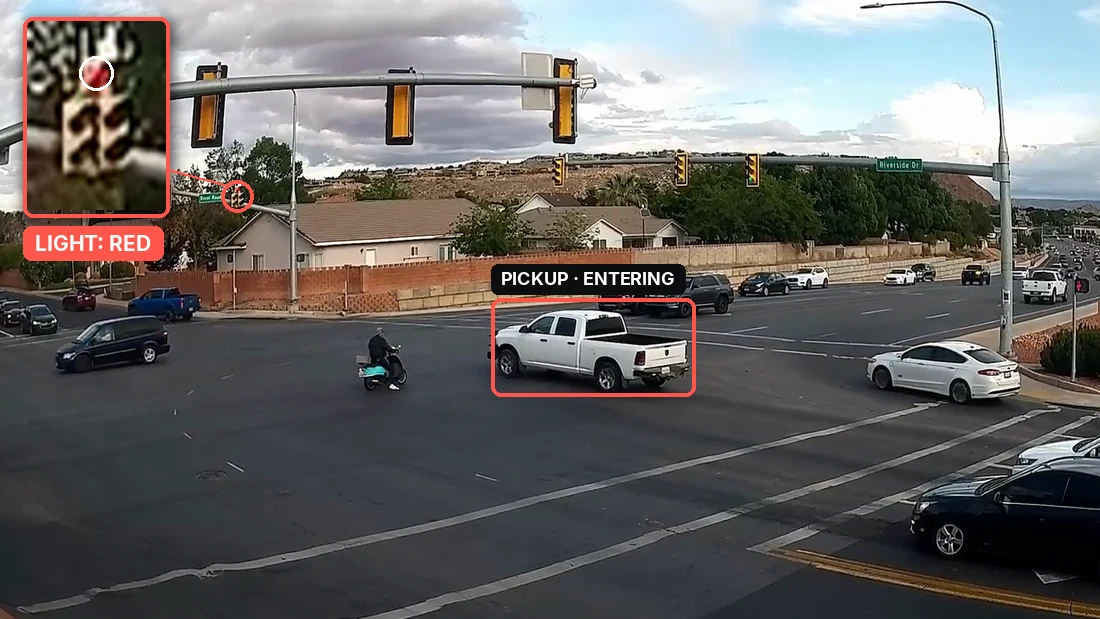
Real crash frame at Riverside Dr and River Rd with the pickup’s signal head zoomed in, showing red

Signalized intersections

The approach, the signal color and the impact in one frame, at the intersections that generate your repeat calls.

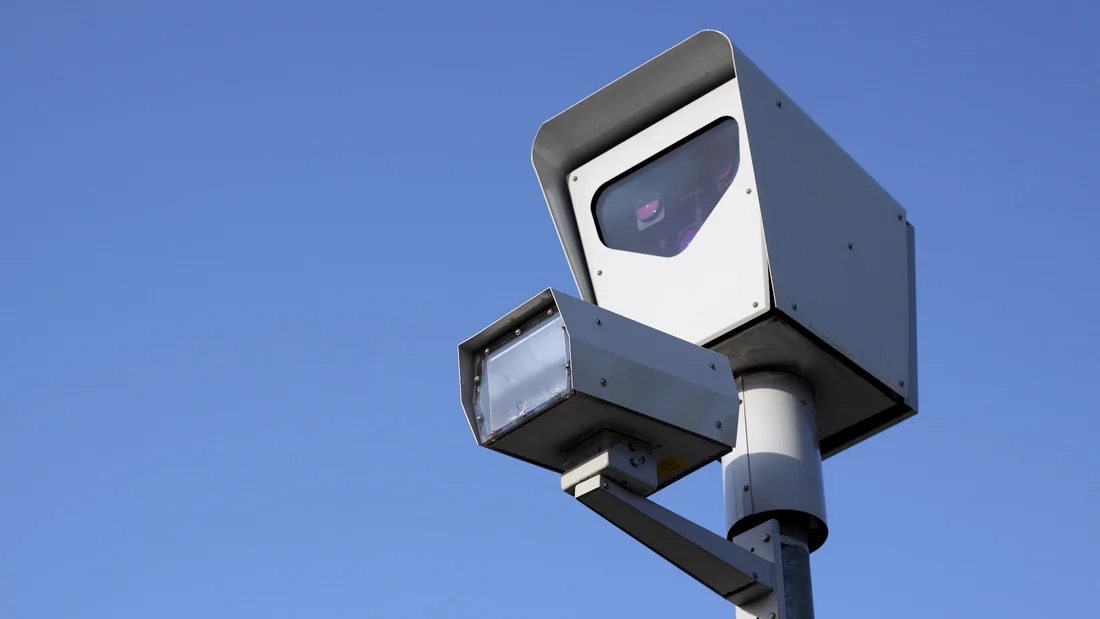
Traffic camera mounted on a roadside pole

Your DOT’s cameras

We integrate the traffic cameras your state and city already operate, so a crash on a DOT feed is one request away — same as ours.

On the call

What changes for your officers.

Statements verified in minutes

Two drivers, two stories. Watch the clip and the determination stops being a judgment call and becomes something that holds up in court months later.

The DI-9 fills itself in

Manner of collision, direction of travel, signal color at impact, speeds, the diagram — pre-filled from the video before the officer types a word, instead of reconstructed from skid marks and memory. Faster reports, fewer corrections.

Hit-and-run with a lead

A vehicle that fled has a direction, a description and a timestamp instead of a witness’s best guess.

Know how accurate your crash data is

We compare what the camera recorded to what went into the crash record for that time and place, and show you where they differ.

Evidence for your traffic engineers

Repeat conflicts, blocked sight lines, signal-timing problems — on video, ready for a safety study or a funding application.

Nothing to install, nothing to maintain

No poles, no conduit, no service contract. We own the hardware, the connectivity and the upkeep — and we plug into the DOT cameras you already have.

How it starts

Pick ten locations. Ninety days.

We install and run the cameras and integrate your existing DOT feeds. You tell us the ten locations that matter most — the intersections, the corridor, the stretch that generates complaints.

For ninety days we record them, match every crash we capture against your crash records, and send a one-page monthly summary: what the camera saw, what the report says, where they differ — with the video linked to every line.

At the end you have a documented measure of how accurate your crash data is at those locations. No obligation either way.

Request a briefing
Included
  • Hardware, installation and connectivity — handled by us, plus integration of your DOT cameras.
  • Direct investigator access to footage from the covered locations.
  • Footage kept for the full pilot, so a case that surfaces late is not already overwritten.
  • A monthly written summary you can attach to a report.
Scope and limits

Said up front.

We fill in the facts. Your officer signs the report.

Nothing we produce goes to the state on its own. The pre-filled DI-9 is a draft: your officer reviews it, edits it and files it — the report stays theirs.

Coverage has edges

We cover the locations our cameras see. Outside that, we have nothing, and we will tell you so up front.

Agency material stays separate

Anything your agency shares is walled off from our consumer service. It is never used for outreach or referrals.

Start the conversation

See a DI-9 fill itself in.

A 20-minute demo on a real crash from your area, if we cover it. Tell us your agency and the locations you care about and we will come back with exactly what we have there — even if the answer is nothing yet.

  • A quick evaluation — no procurement process to find out.
  • Your officer signs — we pre-fill, we never file.
  • A straight answer on whether we cover your locations.
We need a name.
Which agency?
A valid email, please.
A number we can reach you on.
No procurementNo obligationA real person calls
Request received
—
What happens next
  1. We call you, usually the same business day.
  2. We check the locations you named and tell you what we cover today.
  3. You decide: ten locations for ninety days, or nothing.